
The Manor Library: How to Arrange Books, Lighting, and Seating for a Functional Historic Room
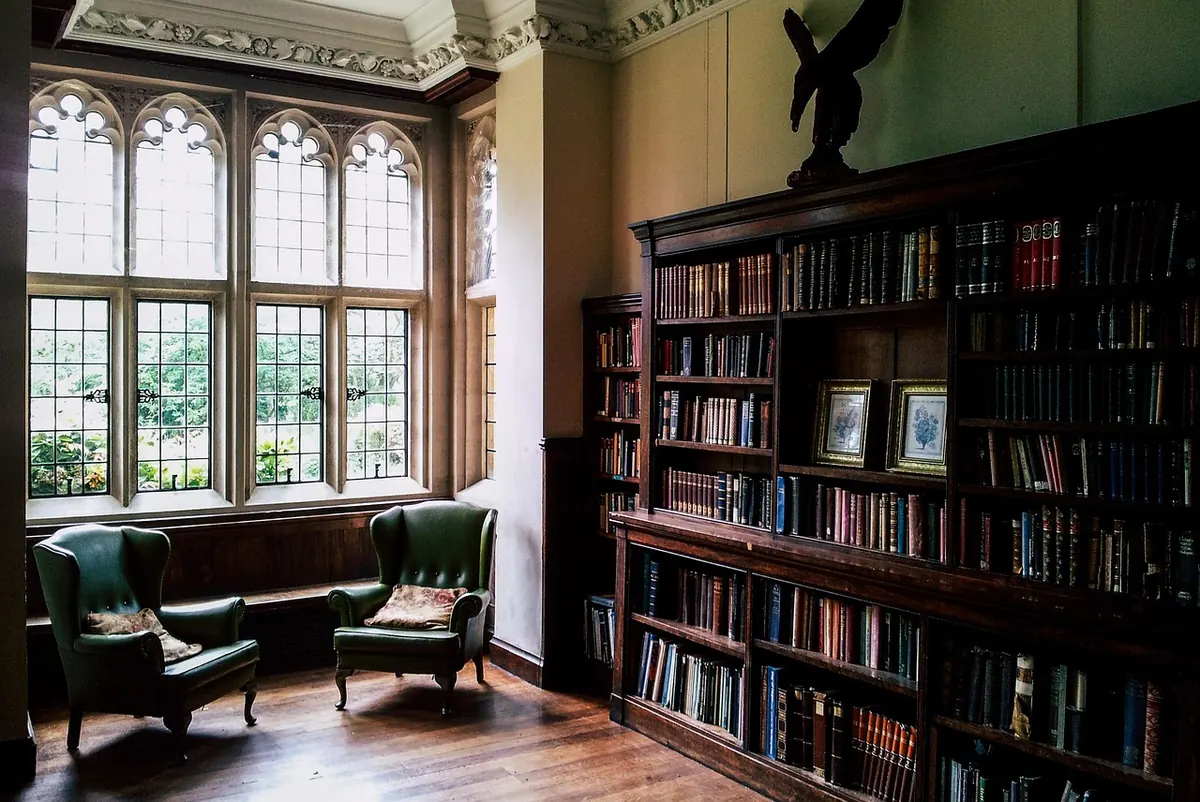
A manor library is rarely a blank room waiting for a clever arrangement. It arrives with opinions: a chimney breast that juts into the floor plan, windows facing the wrong quarter, floorboards that announce every visitor, and shelves that have held the same spines for a century. The task is not to tame the room but to work with it, so that reading, research and display all happen without a single cracked hinge or a fresh scar in the panelling.
Start slowly. An afternoon of measuring and watching saves months of regret.
Begin With the Room, Not the Books
Walk the library at three different times of day. Morning light moves across a room fast; by two o'clock an unprotected shelf of cloth bindings may be taking direct sun. Note where damp shows — a bloom on the plaster behind a case, a musty smell near an outside wall, condensation on old glass. Check the chimney breast for warmth and the radiators for proximity to anything shelved.
Then measure the practical things: door swings, window sills, the height of the skirting, the depth of the alcoves either side of the fireplace. Old manor rooms often have generous alcoves that will take a run of shallow cases perfectly, and awkward piers that will not. Mark the floor where you naturally walk, and keep those routes clear. A library you have to sidle through stops being a room and becomes storage.
Shelving That Respects Old Walls
Freestanding cases are usually the right answer in a historic room. They can be moved, they breathe, and they ask nothing of lime plaster that has survived three centuries without your help. Stand them clear of the wall by a few centimetres, packing out at the skirting so the case sits plumb without pressing on fragile surfaces. That gap lets air move behind and makes cleaning possible.
Where weight is concerned, think like a joist. Heavy runs of books belong against structural walls rather than the middle of a wide floor span, and it is worth spreading large collections across several cases rather than concentrating them in one.
If shelving must be fixed, or if the room is listed or historically significant, take advice before drilling — a building conservation officer or a joiner who works on historic houses will know what the fabric can take. The rule of thumb is simple: reversible, minimal, and never into decorative panelling if a fix into a structural timber will do.
A Shelf Order That Survives Real Life
Perfect classification systems collapse the moment a book is borrowed, returned to the wrong case, or brought down for an evening. Build an order you can maintain without a catalogue open on your knee.
- Group by subject first — history, travel, natural history, family papers, fiction — because that is how you will look for a book.
- Within a subject, arrange by size: folios and atlases on the lowest shelf, quartos in the middle, small volumes higher up.
- Keep heavy books low. A large folio on a top shelf is an accident waiting for a ladder to wobble.
- Leave a little slack at the end of each run so a new acquisition has somewhere to go and a book can be removed without levering its neighbours.
Books should stand upright and slightly supported, not leaning in a heap. Felt-padded bookends are kinder than metal edges. Don't push volumes to the back of a deep shelf; keep spines near the front edge where air circulates and dust is easier to reach. Tall books stored flat for long periods can distort their spines, so reserve flat storage for genuinely oversize items that cannot stand.
Light: Daylight, Lamps, and What Paper Will Bear
Light does the damage that visitors never see until it is done. Ultraviolet fades spines and dust jackets, and heat dries out leather and parchment until bindings crack at the joint. The first line of defence is daylight control: shutters, lined blinds, or a sheer layer that cuts the sun without plunging the room into gloom. Keep shelving out of the direct window band where you can, and rotate anything displayed in the sun path.
For artificial light, choose warm low-heat sources — modern LED in the region of 2700 to 3000K reads well against old paper and timber. Place reading lamps so light falls over your shoulder onto the page rather than glaring across a shelf. Avoid fittings fixed inside bookcases, where heat builds and a bulb sits millimetres from paper. A pair of discreet uplighters to lift the ceiling, plus two or three well-placed table lamps, will usually light a manor library better than a row of spots aimed at the shelves.
Seating: Build Two Rooms in One
A working library usually needs two pieces of furniture more than any other: a chair for long reading and a table for spreading things out. Put the chair where the light is good but the draught is not — away from a door, off the direct line of a window in winter, close enough to a side table for a cup and a notebook. The table belongs near the shelves, so a research session does not involve carrying a tower of books across the room.
- A deep chair with arms, angled toward the light rather than facing the window.
- A side table large enough for a book left open on a stand, not just a glass.
- A firm task chair at the desk, with a lamp that can be adjusted without moving the whole fitting.
- A clear path of at least a comfortable stride between cases and seating.
- A second, smaller chair near the hearth for conversation, placed so it does not block the fire or the walkway.
Rugs help with cold floors and echo, but keep them thin under anything that might catch, and lift them regularly to let boards breathe.
Display Without Damage
Open a book for display only as far as the binding allows, and no further. A foam or card cradle takes the strain off the spine and lets a volume sit at a gentle angle rather than flat. Rotate what is on show — a month or two at a time, away from direct sun — and return items to the shelf. Glazed cases should not be sealed tight against damp; a little ventilation and a sachet of silica gel in a closed case will help steady conditions.
Handle with clean, dry hands for paper and bindings. Cotton gloves are useful for metal, photographs and textiles, where oils and salts do real harm, but they make paper pages harder to turn safely. For anything genuinely valuable, ask a conservator rather than experimenting.
Keeping the Room Alive
A library that is never used deteriorates quietly. Dust with a soft brush and low suction rather than a cloth that drives grit into leather. Watch for the small signals — a musty smell, silverfish, foxing spots spreading, a hinge softening — and act early. Once or twice a year, before the heating season and after it, take everything off one section, wipe the shelf, check for damp at the wall and put it back in order.
Conservators generally care more about stability than about any single ideal figure; wide swings in humidity and temperature do more damage than a room that stays consistently cool and moderate. So keep the fire occasional, the radiators away from shelving, and the windows ventilated on dry days.
Above all, read in the room. Sit in the chair, leave a book face down on the table for an hour, let the place accumulate the small evidence of use. A manor library arranged for real life will outlast any arrangement designed only to be looked at.
Photo: wal_172619 / Pixabay